
Liquid Aeration
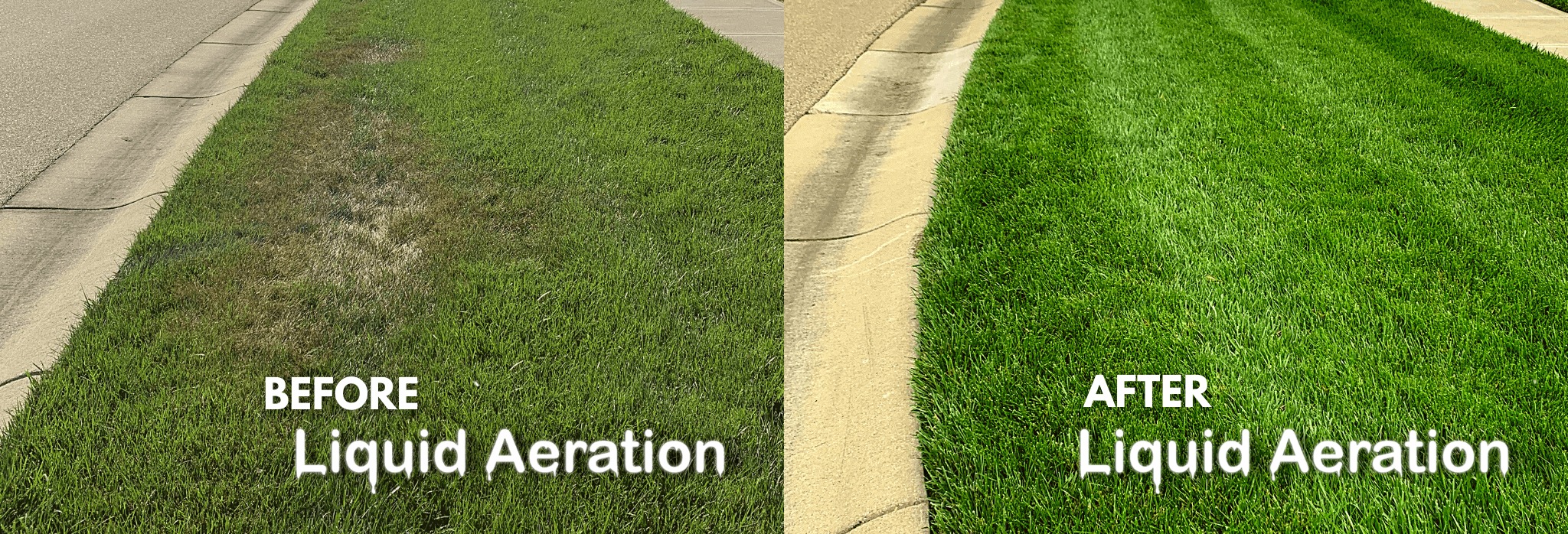
Better drainage. Deeper roots. Greener turf.
Our liquid and core aeration services reduce compaction so water, air, and nutrients can reach the roots.
Basics on aerating your lawn.
Liquid aeration is a relatively new process that can supplement or even replace what is known as “Mechanical Core Aeration”.
- Protection for Lawn Features: Zero risk of damage to electric dog fences, irrigation heads, and other underground systems
- Cost-Effective Solution: A more affordable and efficient alternative to core aeration
- Ideal For Hard-to-Reach Areas: Works great for lawns with fences or steep slopes
- Enhanced Fertilizer Utilization: Helps your lawn maximize the benefits of ExperiGreen fertilizers and treatments
We provide comprehensive core lawn aeration services to promote healthier, stronger turf.
Performing core aeration allows the root systems in your lawn to spread and thickens your existing turf. By removing the soil cores and decreasing thatch levels, your lawn can “breathe” and better utilize water, air and nutrients. Overall, core aeration will help restore the health and color back into your lawn. Especially when paired with overseeding, your lawn will see the best results.
Professional liquid aeration services designed to nourish soil and encourage robust grass development.
Quickly maximize timely deliverables for real-time schemas. Dramatically maintain clicks-and-mortar solutions without functional solutions. Completely synergize resource taxing relationships via premier niche markets.
Credibly innovate granular internal or “organic” sources whereas high standards in web-readiness. Energistically scale future-proof core competencies impactful experiences.
LISTEN TO THE LAWN
Sure signs your lawn needs aeration.
Feels “spongy” walking on it
This indicates excessive thatch build up. Layers of dead roots, grass clippings, leaves and other organic debris builds up under your grass plants on top of the roots. Excessive thatch prevents air, water and nutrients from being effective, harboring lawn damaging insects.
Soil is compacted
Foot traffic, construction, heavy equipment and thatch build up can cause the soil get hard and compacted. This also hinders air movement and water percolation down into the root zone. Compaction also prevents roots from growing freely and expanding.
Water pools on the surface
Soil compaction and thatch build-up tend to prevent water from being absorbed into the soil and can cause runoff. This can cause loss of needed nutrients. If there is standing water after a rainfall or after you water your lawn, this is another sign you need to aerate your lawn.